
If you have ever found yourself puzzled over whether to pursue business analysis vs business analytics, you are not alone. These two fields sound remarkably similar, yet they represent distinct career paths with different focuses, skill sets, and outcomes. The confusion is understandable. Both involve working with data, solving business problems, and driving organizational success. But here is where things get interesting.
Quick Answer:
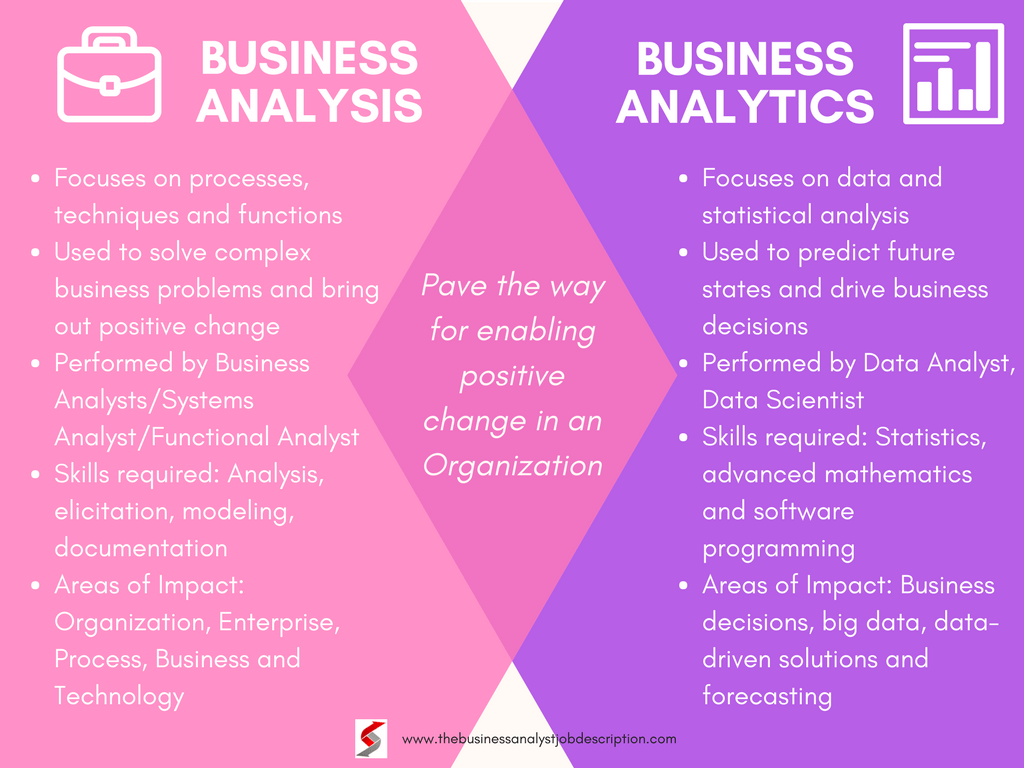
Business Analysis focuses on identifying business needs, analyzing processes, and recommending solutions to improve operations.
Business Analytics uses data, statistical methods, and predictive modeling to extract insights and forecast future trends.
One bridges the gap between business problems and technical solutions, while the other turns historical data into actionable predictions.
Today, the lines between these disciplines have become even more blurred with the rise of artificial intelligence, automation, and real-time analytics. Modern business analysts now need data literacy, while analytics professionals require business acumen. Companies increasingly value professionals who can bridge both worlds. Yet despite this convergence, the core distinction remains critical for anyone planning their career trajectory.
This comprehensive guide will walk you through everything you need to know about both fields. We will explore what each discipline actually does, compare their methodologies, examine required skills, and help you determine which path aligns with your strengths and career goals.
1. What is Business Analysis?
Business Analysis is the practice of enabling change within an organization by identifying needs, defining requirements, and recommending solutions that deliver value. According to the International Institute of Business Analysis, it involves understanding how organizations function, uncovering opportunities for improvement, and facilitating the implementation of changes.
Think of a business analyst as a bridge builder. They connect different stakeholders, translate business needs into technical requirements, and ensure everyone speaks the same language. When a company faces challenges like inefficient workflows, customer complaints, or revenue losses, business analysts step in to diagnose the root cause and design solutions.
Core Activities in Business Analysis
Business analysts engage in several key activities throughout a project lifecycle:
- Requirements elicitation involves gathering information from stakeholders through interviews, workshops, surveys, and observation sessions
- Process analysis examines current workflows to identify bottlenecks, redundancies, and improvement opportunities
- Documentation creates clear specifications using techniques like use cases, user stories, and process flow diagrams
- Solution evaluation assesses proposed changes through cost-benefit analysis, feasibility studies, and risk assessments
- Change management helps organizations transition smoothly from current to future states
Consider this real-world scenario. A healthcare insurance company struggles with high claim rejection rates due to incomplete forms. A business analyst would interview claims processors, examine the current form submission process, identify where confusion occurs, and recommend a solution. This might involve redesigning forms, creating user guides, or implementing validation checks in the submission system. The focus stays on improving the business process rather than analyzing data patterns.
Business analysts work across various domains. Some specialize in IT systems analysis, others focus on organizational change, and many work in product development. Regardless of specialization, they share a common goal of translating business problems into actionable solutions.
Suggested Reading: For more on what business analysts do daily, check out our comprehensive guide on what does a business analyst do.
The Modern Business Analyst Role
The role has evolved significantly. Today’s business analysts collaborate with data scientists, understand Agile methodologies, and possess basic data literacy. They use tools like JIRA for requirements tracking, Lucidchart for process mapping, and increasingly incorporate data visualization into their deliverables. The rise of digital transformation means business analysts now bridge not just business and IT, but also traditional processes and emerging technologies.
2. What is Business Analytics?
Business Analytics takes a fundamentally different approach. It focuses on analyzing historical business data using statistical analysis, data mining, and predictive modeling to gain insights and inform decision-making. Where business analysis asks “what should we change,” business analytics asks “what does the data tell us will happen?”
According to Gartner, business analytics comprises solutions used to build analysis models and simulations to create scenarios, understand realities, and predict future states. The discipline relies heavily on quantitative methods, algorithms, and increasingly, machine learning to extract meaningful patterns from large datasets.
Types of Business Analytics
Business analytics operates across four distinct levels:
- Descriptive analytics examines what happened in the past using data aggregation and visualization techniques
- Diagnostic analytics explores why something happened by drilling down into data and finding correlations
- Predictive analytics forecasts what might happen using statistical models and machine learning algorithms
- Prescriptive analytics recommends actions based on predictions and optimization techniques
Let me illustrate with an example. Netflix wants to reduce subscriber churn. Their analytics team would gather historical data on viewing patterns, subscription duration, content preferences, and cancellation timing. They would build predictive models to identify users likely to cancel within 90 days. Then they might recommend personalized content suggestions or targeted retention offers. This entire process relies on data science techniques rather than process analysis.
Tools and Technologies
Business analytics professionals work with sophisticated tools. Python and R for statistical analysis, SQL for database queries, Tableau and Power BI for visualization, and specialized platforms for machine learning. They need strong mathematical foundations and programming skills to manipulate large datasets and build accurate models.
The field has exploded with the availability of big data and cloud computing. Organizations now collect massive amounts of information from customer interactions, IoT devices, social media, and operational systems. Data analysts and data scientists transform this raw information into strategic advantages. Companies use analytics for customer segmentation, demand forecasting, pricing optimization, and risk management across virtually every industry.
Modern business analytics increasingly incorporates artificial intelligence. Automated machine learning platforms can now build predictive models with minimal human intervention. Natural language processing allows analysis of unstructured text data from customer reviews and social media. These technological advances make analytics more accessible while raising the bar for analytical expertise.
3. Key Differences Explained
While both disciplines aim to improve business outcomes, they differ fundamentally in their approaches, methodologies, and outputs. Understanding these distinctions helps clarify which path suits your interests and abilities.
Focus and Methodology
- Business Analysis concentrates on processes, functions, and people. Analysts examine workflows, gather requirements, facilitate discussions, and design solutions. The work involves significant human interaction through interviews, workshops, and stakeholder meetings. Success depends on communication skills, business acumen, and the ability to understand organizational dynamics.
- Business Analytics centers on data, statistics, and patterns. Analytics professionals spend time cleaning datasets, building models, running statistical tests, and creating visualizations. The work is more technical and solitary, though presentation skills matter when communicating findings. Success requires mathematical thinking, programming ability, and statistical knowledge.
Skills and Tools
The skill requirements diverge significantly:
- Business analysts need strong communication abilities, both written and verbal. They must facilitate meetings, negotiate with stakeholders, and clearly document requirements. Technical skills include systems analysis, process modeling tools such as BPMN, and requirements management software. Domain knowledge in their industry proves invaluable. Most business analysts come from business backgrounds with some technical exposure.
- Business analytics professionals require solid quantitative skills. Statistics, probability, and mathematics form the foundation. Programming languages like Python or R become daily tools. Understanding database systems, data warehousing, and ETL processes matters greatly. Many come from mathematics, statistics, computer science, or engineering backgrounds.
Career Titles and Roles
- Business Analysis encompasses roles such as Business Analyst, Systems Analyst, Requirements Analyst, Process Analyst, and Product Owner. These professionals work in project teams, often serving as liaisons between business stakeholders and technical developers. Their deliverables include requirements documents, process maps, use case diagrams, and business cases. Learn more about related roles in our article on systems analyst careers.
- Business Analytics produces Data Analysts, Business Analytics Specialists, Data Scientists, and Analytics Consultants. They typically work in analytics teams or centers of excellence, sometimes embedded within business units. Their outputs include dashboards, predictive models, statistical reports, and data-driven recommendations.
Problem-Solving Approach
- When faced with declining sales, a business analyst would interview sales teams, examine the sales process, identify friction points, and recommend process improvements or system changes. They might suggest better lead qualification, improved CRM workflows, or enhanced training programs.
- A business analytics professional would analyze sales data across regions, products, and time periods. They would build models to identify which factors correlate with successful sales, predict future trends, and segment customers based on their likelihood to purchase. Their recommendations would be data-driven insights about where to focus efforts for maximum impact.
4. Similarities and Overlap
Despite their differences, these disciplines share common ground and increasingly work together. Both ultimately serve the same master: improving business performance through informed decision making.
Shared Objectives
Both fields aim to address business challenges. Professionals working in these areas utilize process improvements and data insights to help organizations operate more efficiently, enhance customer service, and boost profitability. Success in these roles relies on critical thinking, problem-solving skills, and a strong understanding of business. Additionally, it’s essential to have a clear grasp of how organizations function and identify what drives value creation.
Complementary Strengths
These disciplines often collaborate on projects. Consider an e-commerce company wanting to improve customer retention. Business analysts would map the customer journey, identify pain points in the checkout process, and gather requirements for system improvements. Meanwhile, business analytics professionals would analyze purchase patterns, build churn prediction models, and identify which customer segments need attention.
The famous Amazon “Customers who bought this also bought” feature demonstrates this collaboration beautifully. Business analysts defined the need to increase average order value and designed how the feature should work within the shopping experience. Business analytics built the recommendation algorithms by analyzing millions of purchase transactions to identify product affinities. Neither group could have created this successful feature alone.
Converging Skills
The boundaries continue to blur in 2025. Modern business analysts need basic data literacy. They should understand how to interpret analytics dashboards, work with data visualization tools, and communicate with analytics teams. Conversely, analytics professionals increasingly need business skills. Understanding the business context behind data, communicating findings to non-technical audiences, and translating insights into actionable recommendations require business acumen.
Some organizations now create hybrid roles. Titles like Analytics-Focused Business Analyst or Business-Savvy Data Analyst reflect this convergence. These professionals combine process understanding with analytical capabilities, making them valuable in organizations pursuing data-driven transformation. Exploring the benefits of becoming a business analyst shows how diverse the field has become.
An Example
Despite the stark differences between Business Analysis and Business Analytics, analysis and analytics are ultimately used in concert and, in turn, aid each other in solving business problems.
Again, this is best understood with an example: most of us have used the e-commerce website Amazon. Here, when you inquire about a particular item, you are presented with a little suggestion box like this:
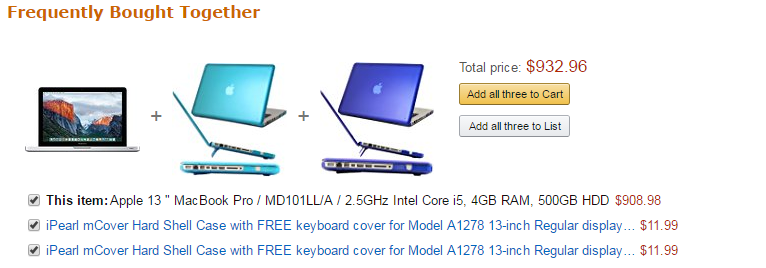
This “Frequently Bought Together” is an innovative and unconventional soft-selling idea by Amazon, where they entice the end user by politely suggesting that people who bought the item also purchased these items. A great way to gain the end user’s attention & curiosity and increase the chances of selling.
Now, let’s think about the feature in terms of Business Analysis: Amazon, possibly, would have questioned its research team on how it could increase the sales of its products without being too pushy. With this problem/requirement, the team of analysts would have devised an analysis plan and approach, gathered user data, considered various options, performed feasibility/cost-benefit/SWOT analysis, modeled the options through prototyping, and, after all the due verifications and validation, finally implemented the “Frequently Bought Together” functionality.
Now, that sounds pretty much all about the development of this feature. But wait, let’s see what part Business Analytics played here: To verify whether this feature is a useful option, a large amount of historical customer purchase data would have been analyzed statistically. This data would have been fed into algorithms and models to gain deeper insights into users’ buying patterns. This data would then have been classified by product categories, demographics, and geographic locations, and compared with other possible suggestions. Finally, predictive analytics would have been used to forecast the likelihood of this suggestion’s success.
Can you see how business analytics played a pivotal role in analyzing and interpreting past performance, which in turn helped in the overall business analysis of the feature? Both disciplines, although unique in their own right, were used hand in hand to pave the way for positive change that delivered value to the organization (Amazon) and its stakeholders (Amazon’s customers).
5. Skills Required in 2025
The skill landscape has evolved dramatically with technological advancement. Here is what professionals need in each field today.
Business Analysis Skills
Communication excellence remains paramount. Business analysts must articulate complex ideas clearly, facilitate productive meetings, and create documentation that diverse audiences understand. Active listening proves just as necessary as speaking and writing well.
Technical competencies include:
- Requirements elicitation techniques like interviews, surveys, and workshops
- Process modeling using BPMN, flowcharts, and swimlane diagrams
- Documentation tools, including Confluence, SharePoint, and requirements management software
- Basic SQL for understanding data structures
- Agile methodologies, including Scrum and Kanban
Soft skills matter enormously. Stakeholder management, negotiation, conflict resolution, and change management set great analysts apart from good ones. The ability to see different perspectives and find compromise solutions drives project success.
Certifications add credibility. The IIBA offers several levels: the Entry Certificate in Business Analysis for beginners, the Certification of Capability in Business Analysis for mid-level professionals, and the Certified Business Analysis Professional for experienced practitioners. The PMI Professional in Business Analysis provides another respected credential.
Recommended Reading: Communication skills for professional success
Business Analytics Skills
Statistical knowledge forms the foundation. Understanding probability distributions, hypothesis testing, regression analysis, and experimental design enables proper analysis. Without this mathematical grounding, analytics work becomes guesswork.
Technical requirements include:
- Programming in Python or R for data manipulation and analysis
- SQL for database queries and data extraction
- Data visualization tools like Tableau, Power BI, or matplotlib
- Machine learning frameworks, including scikit-learn, TensorFlow, or PyTorch
- Understanding of big data technologies like Hadoop or Spark
Analytical thinking distinguishes successful analytics professionals. They must formulate the right questions, design appropriate analyses, interpret results correctly, and recognize when findings might be spurious. Critical evaluation of data quality and model assumptions prevents costly mistakes.
Certifications in analytics include the IIBA Certification in Business Data Analytics, Microsoft Certified Data Analyst Associate, Google Data Analytics Professional Certificate, and various vendor-specific credentials. Advanced practitioners pursue data science certifications or graduate degrees in statistics, analytics, or data science.
6. Career Paths and Salaries
Both fields offer promising career prospects with healthy salaries and growth opportunities. The job market in 2025 shows strong demand for both skill sets.
Business Analysis Career Trajectory
Entry-level business analysts typically start with titles like Junior Business Analyst or Business Analyst I. They work on smaller projects, gather requirements under supervision, and document processes. Starting salaries range from $55,000 to $70,000 annually, depending on location and industry.
Mid-level analysts with three to five years of experience handle larger projects, lead requirements gathering sessions, and mentor junior team members. Salaries typically range from $75,000 to $95,000. Senior business analysts with over five years of experience command salaries of $95,000 to $120,000 or more.
Career advancement often leads to roles like Lead Business Analyst, Principal Business Analyst, or Business Analysis Manager. Some transition into product management, project management, or consulting. The versatility of business analysis skills enables movement across industries and domains. Our comprehensive overview of business analysis as a career explores these paths in detail.
Business Analytics Career Path
Analytics careers typically begin as Data Analyst or Junior Analytics Consultant positions. Entry-level professionals clean data, create reports, and support senior team members in building models. Starting salaries range from $60,000 to $75,000.
With experience, professionals advance to Business Analytics Specialist or Senior Data Analyst roles, earning $80,000 to $110,000. They take ownership of analytical projects, build predictive models, and present findings to leadership.
Senior positions include Data Scientist, Analytics Manager, or Director of Analytics, commanding salaries of $115,000 to $150,000 or more. Some specialists become Chief Data Officers or VP of Analytics at the executive level. The technical nature of the work often keeps professionals in individual contributor roles longer than in business analysis, though leadership opportunities certainly exist.
Job Market Outlook
The US Bureau of Labor Statistics projects 11 percent growth in management analyst positions, including business analysts, through 2033. Analytics roles show even stronger growth as organizations increasingly prioritize data-driven decision-making. Both fields offer remote work opportunities and flexibility, particularly post-pandemic.
Industry matters significantly for both salary and demand. Financial services, healthcare, technology, and consulting firms typically pay premium salaries and offer abundant opportunities. Smaller organizations might combine these roles or have limited positions, while large enterprises maintain dedicated teams.
7. How to Choose Your Path
Deciding between business analysis and business analytics depends on your strengths, interests, and career aspirations. Both offer rewarding careers, but they suit different personality types and skill sets.
Questions to Ask Yourself
Do you enjoy working with people or data? Business analysis involves constant interaction with stakeholders, facilitating meetings, and building relationships. If you find energy in collaboration and communication, this path aligns well. Business analytics involves more independent work with datasets and models. If you prefer solving puzzles through code and statistics, analytics is a better fit.
How comfortable are you with mathematics and programming? Be honest about your quantitative abilities. Business analytics demands solid math skills and comfort with coding. You do not need a PhD, but statistical thinking and programming capability are non-negotiable. Business analysis requires less mathematical depth but demands stronger verbal and written communication skills.
What problems excite you? Process inefficiencies and organizational challenges appeal to business analysts. They love untangling complex workflows and designing elegant solutions. Pattern discovery and prediction intrigue analytics professionals. They get excited about finding hidden insights in data and building accurate models.
Educational Background Considerations
Business analysis welcomes diverse backgrounds. Business administration, management, economics, and even liberal arts graduates can succeed. Many transition from functional roles in operations, marketing, or finance. Technical knowledge helps, but can be learned on the job.
Business analytics favors quantitative degrees. Mathematics, statistics, computer science, engineering, and economics provide strong foundations. While bootcamps and online courses enable career switches, the mathematical requirements present a higher entry barrier. Some foundational knowledge proves necessary before jumping in.
Testing the Waters
Try both before committing. Take online courses in each area. Coursera, edX, and Udacity offer introductory programs. For business analysis, try documenting a process at your current job or by volunteering to gather project requirements. For analytics, download a dataset and perform fundamental analysis using free tools such as Python or Tableau Public.
Talk to professionals in each field. LinkedIn makes networking easy. Ask about their typical day, challenges they face, and what they enjoy most. Their experiences will provide a real-world perspective beyond job descriptions.
The Hybrid Option
Consider developing both skill sets over time. Starting in business analysis and adding analytical skills creates valuable versatility. Conversely, analytics professionals who develop business acumen and communication skills become more effective. The most beneficial professionals in 2025 bridge both worlds, understanding business context while wielding analytical tools effectively.
8. Future Trends
Both fields continue to evolve rapidly with technological advances. Understanding where things are heading helps future-proof your career.
Artificial Intelligence Integration
AI transforms both disciplines. In business analysis, generative AI helps draft requirements documents, generate test cases, and even suggest process improvements. Tools like ChatGPT assist with documentation while maintaining human oversight for accuracy and context. Business analysts who embrace these tools work more efficiently without replacing the human judgment required for stakeholder management and strategic thinking.
Business analytics sees even more dramatic AI impact. Machine learning automates predictive modeling tasks that once required expert data scientists. AutoML platforms can build sophisticated models with minimal human intervention. Natural language processing enables analysis of unstructured text at scale. However, this automation raises the bar for human analysts, who must understand algorithm limitations, ensure ethical usage, and interpret results in a business context.
Agile and Continuous Delivery
Agile methodologies reshape how both disciplines operate. Business analysts increasingly work as product owners in Scrum teams, continuously refining backlogs rather than creating lengthy requirements documents upfront. Analytics teams adopt similar approaches, delivering insights iteratively and adjusting based on feedback rather than conducting months-long studies.
Emphasis on Soft Skills
As technical tasks become automated, human skills become more critical. Business analysts must master facilitation, negotiation, and change management. Analytics professionals need storytelling abilities to communicate complex findings simply. Both fields reward professionals who combine technical competence with emotional intelligence and business savvy.
Sustainability and Ethics
Organizations increasingly consider environmental and social impacts. Business analysts evaluate solutions through sustainability lenses. Analytics professionals grapple with algorithmic bias, data privacy, and the ethical use of AI. Both roles require awareness of broader societal implications beyond pure business metrics.
9. Frequently Asked Questions
Can I transition from business analysis to business analytics?
Yes, though it requires developing quantitative skills. Many analysts take evening courses in statistics and programming while continuing their day jobs. Bootcamps offer accelerated paths. Your business knowledge provides valuable context that purely technical candidates lack, making you attractive to employers once you build analytical capabilities.
Which field pays better?
Business analytics typically offers slightly higher salaries due to the demand for technical skills, particularly at senior levels. However, both fields provide comfortable middle-class to upper-middle-class incomes. Geographic location, industry, and individual expertise matter more than the field itself.
Do I need a certification to start?
Not necessarily. Many professionals enter through relevant work experience or transferable skills. However, certifications help career changers demonstrate commitment and baseline knowledge. They are particularly valuable when one lacks direct experience in the field.
Are these roles being replaced by AI?
Not replaced, but transformed. AI handles routine tasks while humans focus on strategic thinking, stakeholder management, and complex decision-making. Professionals who embrace AI as a tool rather than as a competitor will thrive. The demand for both business analysts and analytics professionals continues to grow despite automation.
Which role has a better work-life balance?
Both can demand long hours during crunch times, but business analytics generally offers more flexibility. Much analytical work can happen independently on your schedule. Business analysis requires synchronous collaboration during stakeholder working hours, though remote work has made this more flexible than before.
Can small businesses afford these roles?
Small businesses often hire consultants or fractional professionals rather than full-time employees. They might also create hybrid roles combining business analysis and analytics. As your business grows, specialized roles become feasible. Both functions provide returns on investment regardless of company size.
Conclusion
The difference between Business Analysis and Business Analytics boils down to focus and methodology. Business analysis examines processes and facilitates organizational change through requirements gathering and solution design. Business analytics extracts insights from data using statistical methods and predictive modeling to guide strategic decisions.
Both fields offer excellent career prospects with strong growth, competitive salaries, and diverse opportunities across industries. Your choice should align with your natural strengths and interests. Do you prefer working with people or data? Process improvement or pattern discovery? Communication or coding?
The good news is that neither choice limits you permanently. Skills transfer between fields, and professionals increasingly blend capabilities from both disciplines. The most valuable contributors in modern organizations understand business context, can work with data, communicate effectively, and drive results.
Whatever path you choose, commit to continuous learning. Technology evolves rapidly, business needs shift constantly, and career success requires adapting. Whether you become a business analyst bridging stakeholder needs or a business analytics professional uncovering data-driven insights, you will play a crucial role in helping organizations navigate an increasingly complex world.
Start exploring your chosen path today. Take an introductory course, network with professionals in the field, or volunteer for relevant projects at your current job. The journey of a thousand miles begins with a single step, and your future in either business analysis or business analytics starts now.